Construction and Civil Engineering News and Knowledge

Structural Eng.

Common Earthquake Failure Modes in Steel-Frame Buildings -

Types of earthquake related failures in structural steel buildings

Steel-frame buildings can provide excellent seismic performance when properly designed and detailed. However, earthquakes subject steel members and connections to repeated cycles of tension, compression, bending, and shear. Inadequate design, detailing, fabrication, or construction can lead to several steel-specific failure modes. General Steel-Frame Failures 1. Beam-Column Connection FailureBeam-column connections in moment-resisting frames experience large cyclic bending moments and shear forces. Modern seismic connections are specifically […] Read More

Common Rebar Mistakes -

Common Rebar Mistakes to Avoid

9 Common Rebar Mistakes to Watch for on Construction Sites Reinforcement steel is one of the most critical components of a reinforced concrete structure. The quality of the final structure depends not only on the concrete itself, but also on whether the reinforcement is correctly sized, positioned, spaced, anchored, and protected. Small mistakes during rebar installation can lead to serious problems later, particularly when they […] Read More

Why Seismic Base Isolator Isn’t Always the Best Choice -

Seismic Base Isolator - Tall vs. Short Building

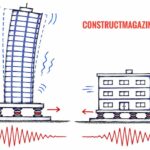
Introduction In structural engineering and real estate development, base isolation is often presented as the ultimate solution for earthquake-resistant buildings. It is true that by decoupling a structure from the ground, it significantly reduces the seismic forces transmitted into the building during an earthquake. However, the belief that base isolation is always the superior choice is a common misconception. While it is an exceptional solution […] Read More

Stairs affecting building stiffness in structural analysis  -

Stairs affecting building stiffness and structural analysis results, causing soft story, torsion

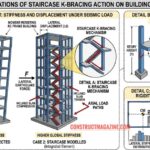
Why Modeling Stairs Can Trigger Soft-Story and Torsional Irregularity Warnings — and How Structural Software Can Improve Structural engineers occasionally report that a building model behaves normally until reinforced concrete stairs are added, at which point soft-story or torsional irregularity warnings suddenly appear. Stairs are commonly included in analytical models because they contribute gravity loads, seismic mass, and sometimes structural stiffness. As a result, software […] Read More

What is Waffle Slab and where it is used -

A waffle slab is made of a thin topping supported by ribs running in both directions, giving it the appearance of waffle when looked from below. Waffle slabs are a special type of reinforced concrete slab, where aesthetics meet with certain structural characteristics. They have advantages such as the aesthetics, higher load capacity and longer spans. Since they are stiff due to their higher overall […] Read More

Structural Considerations for Masonry Walls -

Masonry construction dates back thousands of years. The builders of the past, took advantage of compression strength of stone and were still able to build amazing structures, without even possessing the technology to take on tensile forces, which only became possible in modern times with steel. In our age though, masonry is also combined with reinforcing steel, to make it much more ductile and resistant […] Read More

Earthquake Failures in Buildings -

This is one of the posts in a series of our posts that we discuss failures. Also check out the other posts in constructmagazine.com, where we discuss failures in different contexts of civil engineering. A Brief Introduction of Earthquakes vs. Structures: Earthquakes are very important aspect of most design in civil engineering, and for any type of structure. The fundamental earthquake principles as it applies […] Read More

Structural Engineering Failures -

Structural engineering is a major branch of civil engineering, and realistically the first thing that comes to mind of many, when the words civil engineering are mentioned. It deals with designing the body of all types of structures and their supplementary components, connections, attachments per the criteria given in codes, to ensure public comfort and safety. As we mentioned in the previous post in Construct […] Read More

Assumptions, simplifications in engineering theory and design -

Engineers make assumptions all the time. All these assumptions are backed up by logic and theory, so instead of pursuing exact values, in civil engineering often times we are okay with close enough values, as long as the results are within acceptable limits and we can justify it with relevant proven theory. Doing so, saves a great deal of time and effort, which makes developing […] Read More

General Steps of Structural Analysis for Nonengineers – A Roadmap -

Simple structural frame with external loads

For non engineers, structural analysis may seem like an overly complex subject. A person who is not a civil engineer will never be required or even allowed to solve a real structure, but it is still good to give some general idea for learning. This came to my mind when I heard a question once, from a nonengineer, who drew sketch of a really simple […] Read More