Common Rebar Mistakes
9 Common Rebar Mistakes to Watch for on Construction Sites
Reinforcement steel is one of the most critical components of a reinforced concrete structure. The quality of the final structure depends not only on the concrete itself, but also on whether the reinforcement is correctly sized, positioned, spaced, anchored, and protected. Small mistakes during rebar installation can lead to serious problems later, particularly when they are hidden once the concrete is poured.
Below are nine common rebar mistakes that are worth checking carefully before and during concrete placement. These issues cover both reinforcement detailing and practical site installation, and they can serve as a useful checklist for engineers, supervisors, inspectors, and construction teams.
1. Incorrect Bar Sizing / Diameter
Using the wrong rebar diameter compared with the approved structural drawings is a basic but serious mistake. Examples: installing Ø12 bars instead of Ø16, using a smaller diameter because the specified size is unavailable, or mixing bar sizes without approval.
2. Incorrect Bar Spacing or Congestion
Rebar must be placed at the specified spacing, while excessive reinforcement can create congestion and prevent proper concrete flow, and make the element over-reinforced.
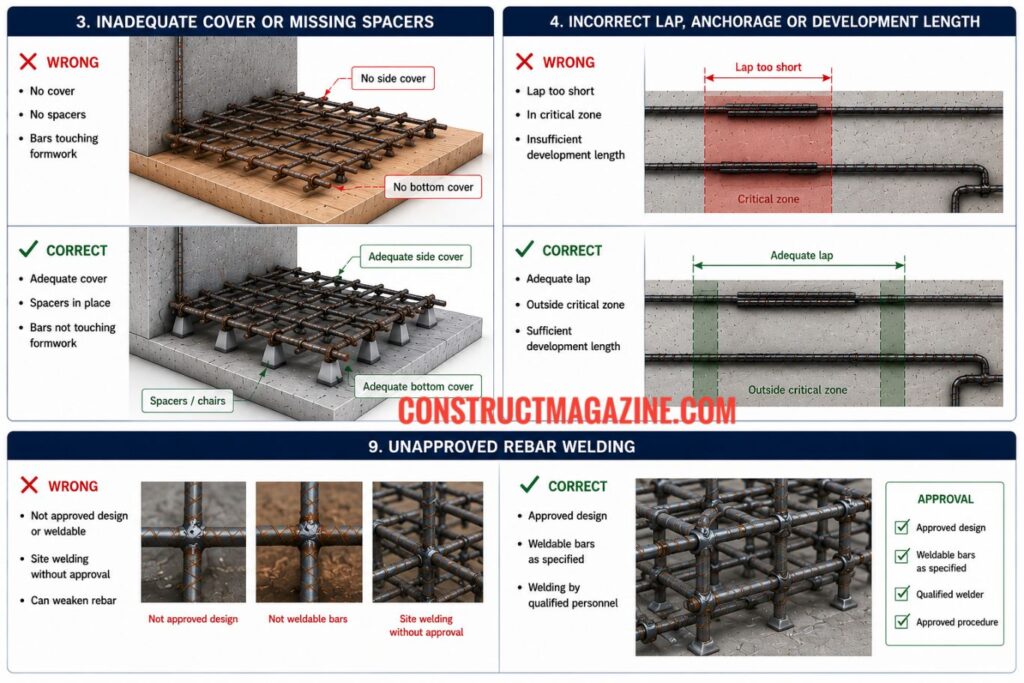
3. Inadequate Concrete Cover or Missing Spacers
Rebar needs adequate concrete cover for durability, fire protection, and bond. Examples: bars sitting directly on formwork, insufficient side or bottom cover, missing concrete spacers, or inadequate chairs allowing the reinforcement to sag or get displaced during concreting.
4. Incorrect Lap, Anchorage or Development Length
Reinforcement needs sufficient length and proper positioning to transfer forces safely. Examples: lap length being too short, laps placed in critical zones, bars terminating without adequate anchorage, or insufficient development length beyond a support or critical section.
5. Missing Structural Reinforcement
Required reinforcement can be completely omitted or forgotten in specific areas. Examples: missing stirrups, missing top reinforcement over supports, missing additional bars around openings, missing corner reinforcement, or missing extra reinforcement required at concentrated loads including post tensioning anchorage zones, or around lifting anchors/embedded plates.
6. Improper Bar Positioning, Alignment or Displacement
Even correctly sized reinforcement becomes ineffective if it is not maintained in its designed position. Examples: column bars out of alignment, loose tying, reinforcement shifting during concrete placement, or beam/slab bars moving vertically or horizontally during the pour.
7. Dirty, Corroded or Improperly Stored Rebar
Poor handling and storage can damage reinforcement or introduce contaminants. Examples: rebar stored directly in mud, excessive rust or scale, bars contaminated with oil or other substances, or improperly stacked bars becoming bent or damaged.
8. Incorrect Bar Bending or Crank Geometry
Bars must be bent according to the approved reinforcement details. Examples: incorrect hook geometry such as a 90° hook where a 135° hook is required, incorrect bend dimensions, wrong crank position, or bending a bar differently from the approved drawing.
9. Unapproved Rebar Welding
Welding reinforcement without the appropriate design/specification approval can affect the steel and structural performance. Examples: welding bars simply to make installation easier, welding bars that were not specified as weldable, or making site modifications by welding without engineering approval.
Final Check Before the Pour
A thorough reinforcement inspection before concrete placement is one of the best opportunities to catch these issues while they can still be corrected. Checking the reinforcement against the latest approved drawings, reinforcement schedules, and project specifications can help prevent mistakes from becoming hidden inside the finished structure.
Post By: A. Tuter
———–
Terms of Use: Unauthorized copying is prohibited; we maintain dated records to document original publication. Content may contain inaccuracies. See our Terms Page.